The economic is political: Reflections from CLES’ Community Wealth Building Conference 2025
In early July, the Centre for Localised Economic Strategy (CLES) held their annual Community Wealth Building (CWB) conference, bringing together people working across the “new economy” movement, local and national government, and those with lived experience of economic injustice.

By Cathy Brown
26 August 2025
In July, the Centre for Localised Economic Strategy (CLES) held its annual Community Wealth Building (CWB) conference, bringing together people working across the ‘new economy’ movement, local and national government, and those with lived experience of economic injustice.
It was a timely gathering, especially given the current political landscape, and it surfaced deep connections with the work we are trying to do through our Economic Justice Brum network. Here are some takeaways:
The economy is political
There was broad consensus in all the sessions that we cannot separate economics from politics. It is shaped by political will, ideology, and decisions. With the rise of populist narratives participants felt it was vital community wealth building was as inclusive as possible
Author and economist Grace Blakeley highlighted the current distrust in and disenchantment with our political system and the despair which long-term austerity has resulted in, with many feeling ignored and as though nothing ever changes. For decades we have been led to believe that the market should be in charge, not community. Poverty and inequality has increased and there is a perception that democracy has declined.
Movement building and connecting issues in Birmingham
Focusing on building local power
One of the most resonant discussions was about the imbalance of power between the national, regional, and local. Speakers raised concerns that national groups, even well meaning ones, often unintentionally disrupt or displace grassroots efforts. Whilst they might be better resourced, they aren’t embedded long term in communities. This has resulted in the fracturing of trust and also competition between grassroots groups. Both Grace, and Carla Denyer from the Green Party highlighted how localised, relational power – not transactional – is where change happens. Communities need to be in control, not just consulted.
The need to think long term
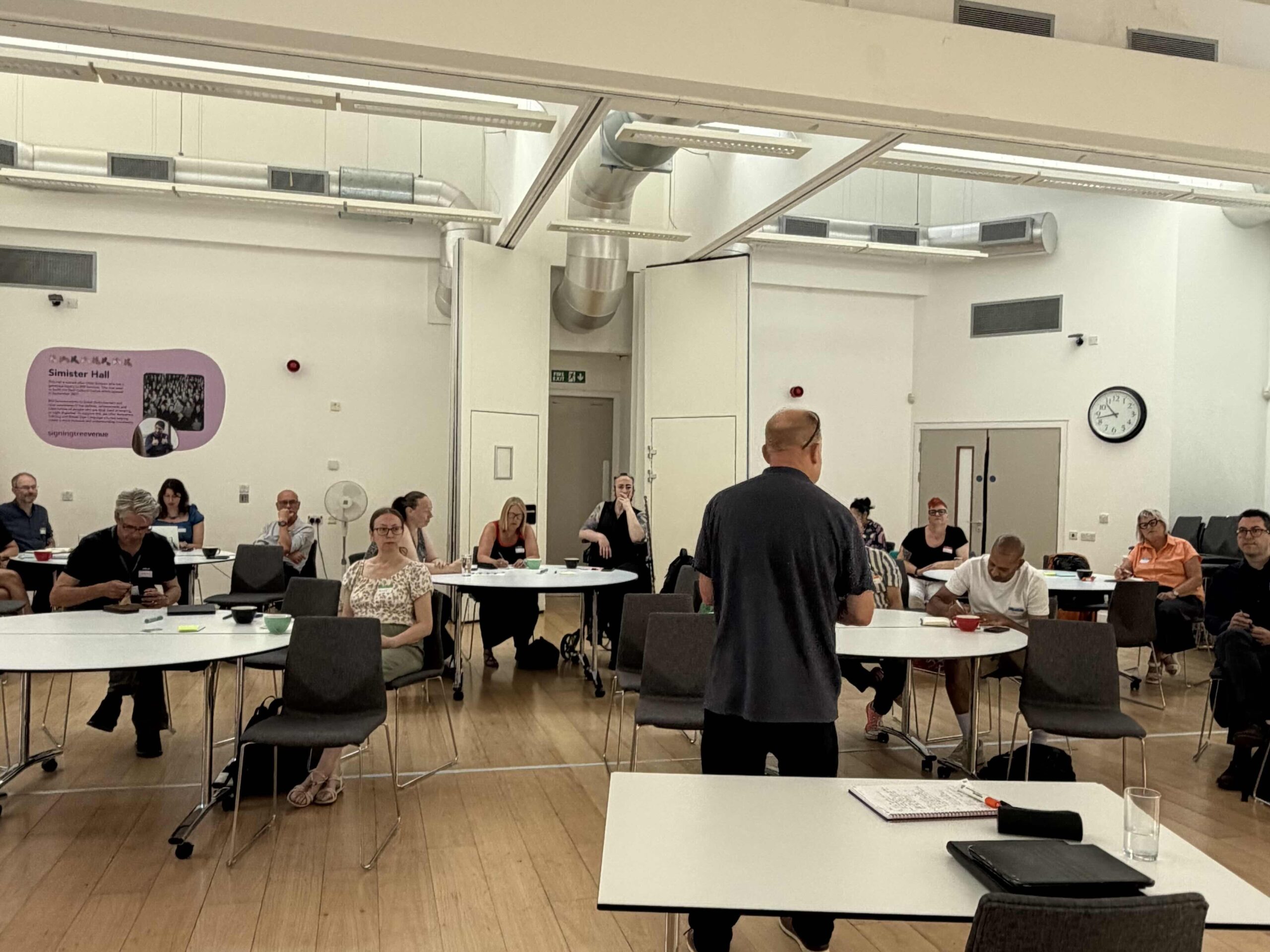
“There is not enough long term funding” is a phrase which will resonate with many members of Economic Justice Brum. This is a sentiment which surfaced in a session facilitated by EJB’s very own SEND Seen Huddle which presented on the work of their huddle (read more).
Families with children with special needs are stuck in broken systems where parents are forced to quit their jobs, fall into housing difficulties, and are passed from service to service. As one parent said “We are too busy fighting fires to change the system”.
They also spoke about how small short term pilots by local authorities and national organisations don’t offer enough stability. We already know that the problems are systemic, with parents and carers exhausted, in underfunded circumstances where their labour is often invisible. Their lived experience should be front and centre of decision making – “listen first and make policy second” – as one panelist said, and there should be a focus on relationship building, frontline services, and better long term resourcing, as opposed to “innovative pilot projects”. They said there also needs to be more collaboration to avoid duplication.
We are already building the next economy
We heard examples from Manchester, Preston and Wales which offered glimpses of what local economies driven by community-informed decision-making could look like.
But councils are limited by central government restrictions, resulting in limited funding, legislation which doesn’t reflect current circumstances, and more. Power is still too centralised. Local people are best placed to lead change.
We also need to ensure that development is equitable – racial justice, migrant justice, gender equity, trans rights, environmental justice, etc are not secondary considerations.
What does this mean for Economic Justice Brum?
- Keep building deep relationships with groups, organise together. We need to be united and find common ground. We are best placed to lead change.
- Push back against extractive funding and partnerships which don’t centre the communities which they are supposed to serve.
- Push for long term solutions.
- Share learning, share lived experiences, which should be at the forefront of decision-making.
- Continue challenging power and systems. Whether its big organisations, councils or government accountability and transparency should be paramount.
With no end to austerity, rising inequality, and political shifts we need to find hope in each other. Power and organising already exists in our communities and our economic justice network. As we enter a new period in Economic Justice Brum, this is what we hope to harness.
More from EJB
Spread the word
Start talking to your friends and neighbours about what economic justice could mean for Birmingham.


Sign Up
Get email updates from Economic Justice Brum